Stronger processing can damage an image without producing a useful detector result. In Deprint's desk-scene tests, stronger redraws remained Hive-positive even as they changed more of the picture.
A strength setting usually controls something about the processing operation. It is not a reliable dial for “less detectable.” Different methods may also define strength differently.
Compare the cost of stronger treatment
Measured desk observations from the frozen Deprint sample. The percentages below are Hive scores, not accuracy rates.
Fixed chain
What this means
SSIM against the original was 0.809877. This remained a positive classification.
Strong SDXL
What this means
SSIM was 0.762468. The output changed more on this metric without achieving a negative verdict.
Qwen then SDXL
What this means
SSIM was 0.610816. This is a scene-specific observation, not a ranking of all possible configurations.
What happened on a difficult scene
The desk scene had already resisted a fixed SDXL processing chain. Follow-up experiments tried a stronger Qwen redraw, that redraw followed by the SDXL chain, and a stronger SDXL chain. These are different treatments of one reused scene, not a ranking across a large image collection.
| Desk treatment | Hive AI score | SSIM against the original |
|---|---|---|
| Earlier fixed SDXL chain | 90.9% | 0.8099 |
| Stronger Qwen redraw | 99.9% | 0.6238 |
| Stronger Qwen, then SDXL chain | 99.8% | 0.6108 |
| Stronger SDXL chain | 99.7% | 0.7625 |
All four outputs remained positive in Hive. The SSIM values describe pixel similarity under the recorded comparison; lower values mean less measured similarity. They are not user approval scores.
The comparisons do not isolate one universal “strength” variable. The Qwen and SDXL paths use different operations. What they show is narrower and practical: these more aggressive candidates did not solve this scene's detector failure.
Why a lower score is not the whole goal
A treatment can make a face look different, alter a product label or shift a brand color. If the resulting picture no longer does its job, a lower score would not make it a successful export.
The selected portrait from a separate experiment makes this visible. Its full-chain output received negative observations in Gemini, Hive and Sightengine, but retained noticeable differences from the original.
One selected example. Look at skin texture, clothing folds and the shift from red to orange. This output received negative detector observations, but the same chain failed on desk and bakery scenes. The final export also changed dimensions.
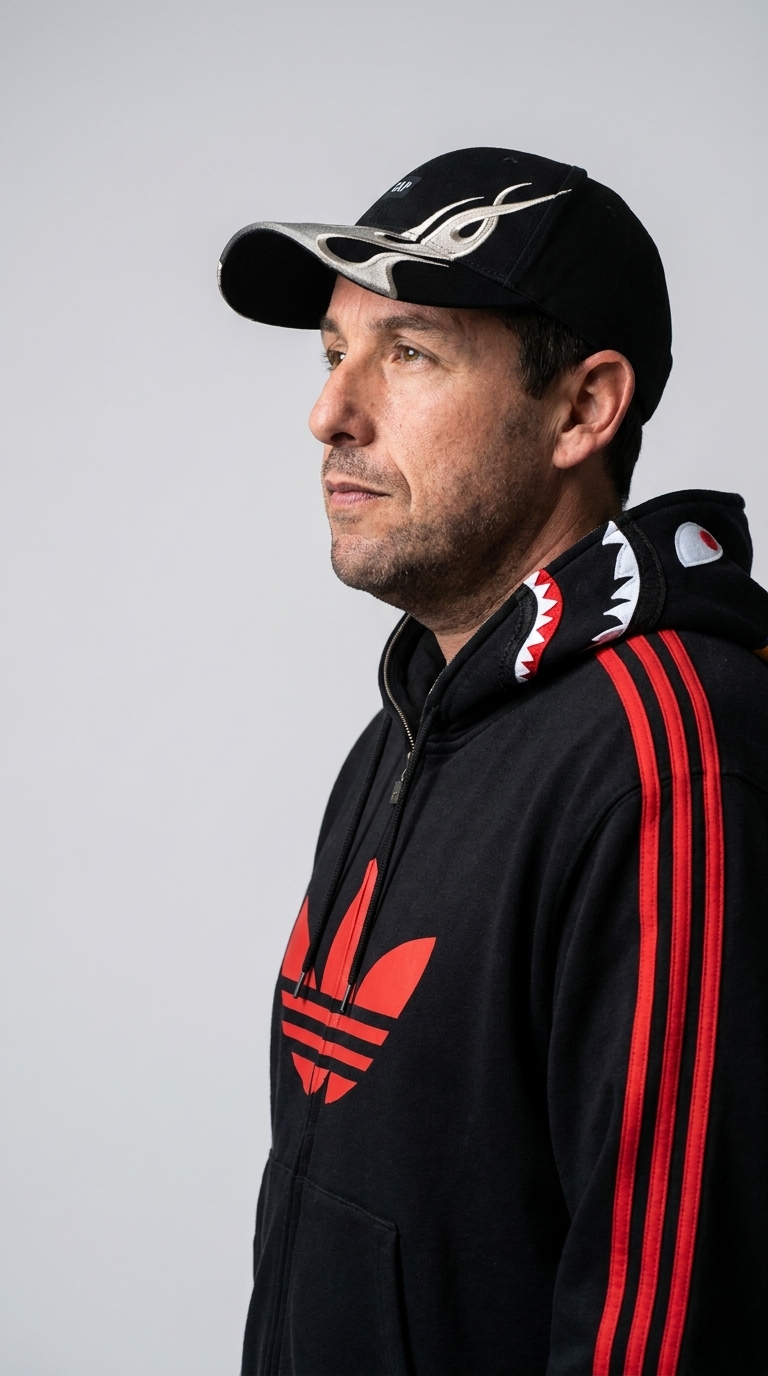
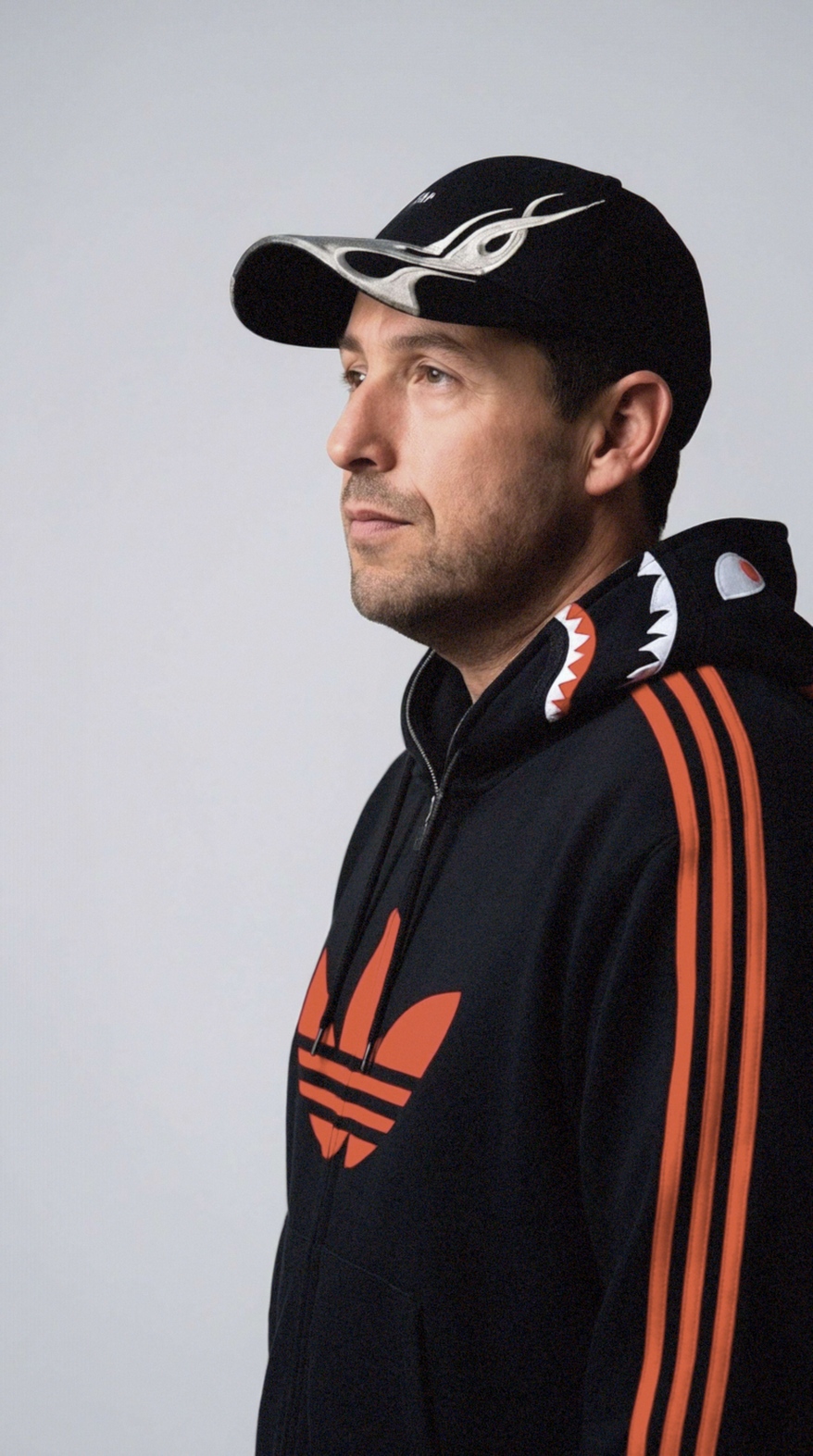
Select an image to inspect the full-size file. These are the archived files; your browser scales their display. Example from AI-Image-Detection-Bypass, with Deprint processing. Attribution and file hashes. No endorsement is implied.
This portrait is not evidence that stronger processing would rescue the desk. It shows why detection and preservation need separate checks.
Set a stopping rule before you start
Decide which details cannot change. Keep the original and a small number of clearly named outputs. Compare each at the same display size, with important areas inspected at full resolution.
Stop treating the detector score as the only objective when the export changes critical content. If you try a different method, keep it as a separate comparison rather than repeatedly processing the latest damaged copy without a reference.
For metadata privacy, a pixel-preserving cleanup may be enough. For a redraw, consult the processing guide and review the delivered image. Processing completion alone does not mean external detectors have checked it.
What a better comparison would measure
A useful study would compare several settings within the same method, on new images, using fixed quality requirements. It would report both how often outputs change the detector verdict and how often those outputs still meet the preservation requirements.
It would also keep errors and missing verdicts visible. Selecting only the lowest score from many attempts makes a workflow look more dependable than it may be for a new image.
A strength slider is not a common unit
Two tools can use the word “strength” for different parts of their pipelines. Even within one tool, a setting can interact with the input, resolution, model and random seed. A higher number does not necessarily mean a proportionally larger visible change, much less a predictable detection result.
That is why the desk table should not be read as a controlled sweep of one universal parameter. The Qwen and SDXL paths changed different operations. The practical finding is that the tested aggressive alternatives remained positive, not that a specific setting is best for every image.
A cleaner follow-up would vary settings within one frozen implementation and keep the rest of the procedure fixed. It would then test new scenes, with visual requirements decided in advance.
Use two acceptance gates
An output should meet the detection requirement and the preservation requirement if both matter to the task. Passing only one is a partial result.
| Detection outcome | Quality outcome | Useful interpretation |
|---|---|---|
| Target met | Acceptable | A successful output under the stated checks |
| Target met | Unacceptable | A detector result with too much visual cost |
| Target missed | Acceptable | A usable-looking image that did not meet the detection goal |
| Target missed | Unacceptable | A failed candidate on both dimensions |
This table is a decision aid, not a new experimental result. It prevents a lower score from hiding a changed face, broken label or altered object.
A product-label example
Imagine a redraw that makes a generated package look more photographic but changes “250 g” to “280 g.” A whole-image similarity score may not make that small region look important. For a customer, however, the output now describes a different product.
The sensible stopping rule is to reject that candidate for the intended use, even if a detector’s label improves. Increasing strength again does not address the preservation failure. Return to the original and compare a different approach if the task still requires one.
The same principle applies to identity in a portrait, diagram labels or the geometry of an object. Define the non-negotiable details before looking at the lowest score.
Avoid an untracked chain of repeated edits
If every new attempt starts from the latest processed image, earlier changes become part of the next baseline. A small final adjustment can then be described as gentle even though the full journey changed the source substantially.
Keep the original as the reference and name each intermediate. Record the full sequence, not just the last step. When comparing alternatives, generate them from the same starting point wherever possible.
A useful result is reproducible and understandable: which operations were applied, which exact file was tested, what the detector reported and what changed visually. The current desk experiments meet that narrower reporting purpose. They do not justify a rule that “more processing always helps” or its opposite for all possible methods.
How we tested, and what remains unknown
The stronger-redraw observations were collected October 9, 2026. They concern one repeatedly studied desk image. The stronger SDXL version was adapted to fit the available hardware. Checks found small numerical differences from the reference implementation; the methods explain those differences. It was not an exact reproduction.
No broader success rate, unchanged-identity claim or best-setting recommendation follows from these tests. Read the methods and exact reported measurements.
Next: how to evaluate image quality separately from detector scores.