“No quality loss” needs a clear definition. It can mean identical pixels, a picture that looks similar at normal size, or simply an unchanged width and height. Those are different promises. Deprint's selected portrait passed several checks after processing, but its appearance changed.
Before choosing a treatment, decide what must stay the same: a face, a logo, readable lettering, exact colors, or every pixel.
Decide which details must survive
Illustrative examples of acceptance rules. Set these before comparing detector scores.
Product photo
What this means
A lower score is not useful if the output advertises the wrong color or changes the brand name.
Portrait
What this means
Compare at the same display size, then inspect local details. A whole-image similarity number can hide a face change.
Illustration
What this means
A decorative image can have a different quality budget from a catalog or documentary photograph.
Lossless and visually similar are different
| Claim | What you should expect | How to check |
|---|---|---|
| Pixel-lossless | The decoded pixel values stay identical | Compare decoded images, including orientation and color handling |
| Visually similar | Changes may exist but should meet your needs | Compare the images at normal size and inspect important details |
| Same resolution | The output keeps its width and height | Check dimensions; this says nothing about changed content |
| Lower detector score | A named detector returns a lower value | Inspect that result separately from image quality |
A metadata-only operation can preserve the image pixels. It does not establish removal of a watermark embedded in those pixels. A generative redraw can change the content even when it keeps the composition and dimensions.
A closer look at a processed portrait
The first comparison shows a public AI portrait before and after redraw with detail restoration. The framing stays familiar, but similar framing is not proof of an unchanged face.
Both files have the same dimensions. The restored version retained more measured detail than the camera-treated version in this example. It is not pixel-identical or a guarantee of preserved identity.
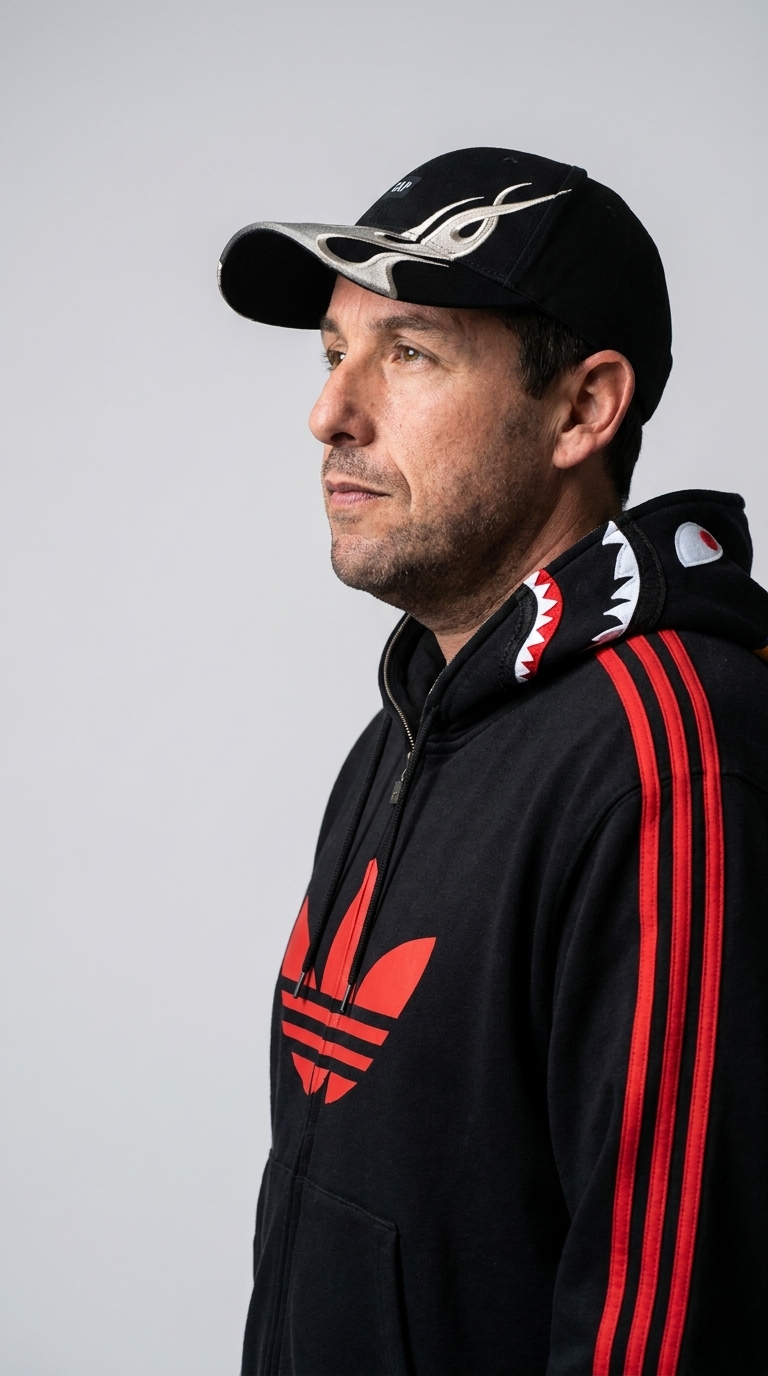

Select an image to inspect the full-size file. These are the archived files; your browser scales their display. Example from AI-Image-Detection-Bypass, with Deprint processing. Attribution and file hashes. No endorsement is implied.
A later camera-style stage pushed the Hive score lower on this example. It also changed color and texture.
Before means the restored intermediate here, not the original. The later camera stage changed color and texture. Both are native-size exports; the final resized JPEG is a separate file.

Select an image to inspect the full-size file. These are the archived files; your browser scales their display. Example from AI-Image-Detection-Bypass, with Deprint processing. Attribution and file hashes. No endorsement is implied.
The restored intermediate received a negative Gemini watermark observation and a negative Hive classification at 42.2%. The later camera-stage PNG scored 7.1% in Hive, but did not receive its own qualified Gemini check. Do not carry one file's watermark result over to another version.
What the measurements show
SSIM is a measure of image similarity. A higher value means closer agreement under that measurement; it is not a percentage of unchanged pixels or a score for preserved identity.
| Native-size portrait version | SSIM against original | Hive AI score |
|---|---|---|
| Redraw | 0.8967 | 92.4% |
| Redraw, JPEG step and detail restoration | 0.9496 | 42.2% |
| Above, then camera processing | 0.7920 | 7.1% |
All three rows use the same native dimensions. The later resized final JPEG is excluded from this similarity table because its reference image also had to be resized. These are cumulative stages on one selected portrait, not independent trials of each operation.
The lowest detector score did not identify the version that best preserved this picture. Desk and bakery images also failed to reproduce the portrait's detector outcome, so this is not a general recipe.
Inspect the details that matter to you
For a portrait, compare the eyes, mouth, hairline and expression. For a product, compare its shape, label, logo and color. For a screenshot or diagram, read the small text instead of judging only the overall layout.
Keep the original open beside the output. Look at both at the intended display size, then inspect important areas at full size. If a critical detail changes, a favorable detector score does not make the export suitable for your use.
Deprint's processing guide explains the available modes. Choose metadata cleanup when you need pixels preserved. Treat redraw modes as experiments whose outputs need review.
Build a quality budget before you compare scores
A quality budget is a plain list of what may change and what must not. For a portrait, identity and expression may be essential. For a product image, exact label text and color can matter more than background texture. For a decorative illustration, some changes may be acceptable.
Write those requirements before processing. Otherwise a low detector score can bias the inspection: you start looking for reasons to accept the output instead of checking whether it serves the original purpose.
| Use | A detail worth checking closely | A possible reason to reject the output |
|---|---|---|
| Product listing | Label, material and color | The buyer would see a different product |
| Portrait | Eyes, mouth, glasses and expression | The subject’s appearance changes |
| Diagram or screenshot | Labels, symbols and small text | The meaning becomes incorrect |
| Decorative background | Composition and visible artifacts | The effect distracts at delivery size |
These are example acceptance rules, not universal thresholds. The right standard depends on what the image communicates.
Why a high similarity score can miss the important problem
A whole-image metric summarizes a large number of samples. A small changed region can be crucial to a person while contributing relatively little to that summary. A one-character change on a product label is a simple example: the overall picture may remain highly similar, but the message is wrong.
SSIM also depends on the comparison procedure. Resizing, alignment, color handling and the chosen reference can affect the number. Compare native-size intermediates together when possible. If the reference is resized for a final export, describe that separately rather than mixing the result into a table of native-size comparisons.
The portrait table above follows that rule. The final JPEG’s similarity measurement used a resized reference, so it is not presented as directly interchangeable with the native-stage values.
Inspect at two scales, then make the decision
First look at the output where it will be used: a web page, slide or printed proof. Then inspect the details you identified as important at matched scale. Use the full-size links in the comparison rather than relying only on the small embedded preview.
Do not compare one image zoomed in and another fitted to a window. Differences in display size can make an output look sharper or smoother without revealing whether it retained detail. Likewise, a larger pixel count is not proof that reconstruction preserved original information.
When a critical detail fails, keep that quality failure in the result even if detection improved. A meaningful success requires both conditions if both were part of the task. A tool can produce an interesting detector result and still produce an unusable image.
There is no single score in this archive that certifies preserved identity, perfect text or general viewer preference. Those would require their own assessments. The before/after files let readers inspect the visible tradeoff directly.
How we tested, and what remains unknown
The observations were collected October 8–9, 2026, on exact archived exports. Visual changes were recorded during review; this was not a blinded human preference study. The images are a selected public example, not evidence of typical performance across faces or products.
Gemini and commercial detector interfaces can change, and their internal preprocessing is not visible. Methods, file hashes and measurements are available so you can distinguish an observed result from a broader claim.
Next: why the same treatment can succeed on one image and fail on another.