Removing a detectable SynthID watermark does not guarantee that an image will pass an AI image detector. The checks look for different things. In two Deprint examples, Gemini stopped reporting a watermark after processing, while Sightengine still classified both images as AI-generated.
If you cleaned an image and it is still being flagged, first identify which check is flagging it. Repeating the same cleanup may not address that signal.
A visual guide to the three checks
Conceptual illustration. These are separate checks, not a promise about a file.
Metadata
What this means
This can reveal location, editing software or a credential. It does not read every signal in the pixels.
Watermark
What this means
A negative answer concerns that verifier and file. It does not establish a camera origin.
Visual detector
What this means
The classifier can flag a watermarked or unwatermarked image. Its result can disagree with the watermark check.
Three checks that answer different questions
| Check | What it looks for | What a negative result tells you |
|---|---|---|
| Metadata inspection | Information stored with the file, such as software tags or Content Credentials | Those checked records were not found |
| SynthID verification | A particular watermark embedded in the image | The verifier did not report that watermark in that check |
| Visual AI detection | Patterns a classifier associates with generated images | That classifier did not flag the file at its current threshold |
Google describes SynthID as a signal embedded in the content. It is different from attached metadata and from a general visual classifier. None of these checks alone can establish that a picture came from a camera.
What happened when the checks disagreed
Deprint tested two Google-generated scenes before and after a reconstruction treatment called DeSynth. A control copy had the original decoded pixels but no attached metadata. That control still triggered the Gemini watermark check, helping separate metadata cleanup from changes to the image itself.
| Scene and file | Gemini watermark observation | Sightengine GenAI score |
|---|---|---|
| Desk, original-pixel control | Detected | Not submitted for this control; original JPEG scored 99% |
| Desk, processed output | Not detected | 99% |
| Bakery, original-pixel control | Detected | Not submitted for this control; original JPEG scored 99% |
| Bakery, processed output | No Google AI signals reported | 99% |
These are observations from October 7–8, 2026. Gemini's verification response is not a raw SynthID score. Sightengine's displayed percentages are vendor scores, not measured probabilities that the image has a particular origin. The practical finding is the disagreement, not a success rate.
Can an image pass both kinds of check?
One selected public portrait did. A different processing chain produced an exact output for which Gemini reported no SynthID, Hive displayed 2.9% AI and a negative classification, and Sightengine displayed 0% GenAI. The original-pixel watermark control was positive.
That result came with visible changes. The same fixed chain remained Hive-positive on the desk and bakery at 90.9% and 99.9%. It therefore cannot support a promise that the treatment works for any image.
One selected example. Look at skin texture, clothing folds and the shift from red to orange. This output received negative detector observations, but the same chain failed on desk and bakery scenes. The final export also changed dimensions.
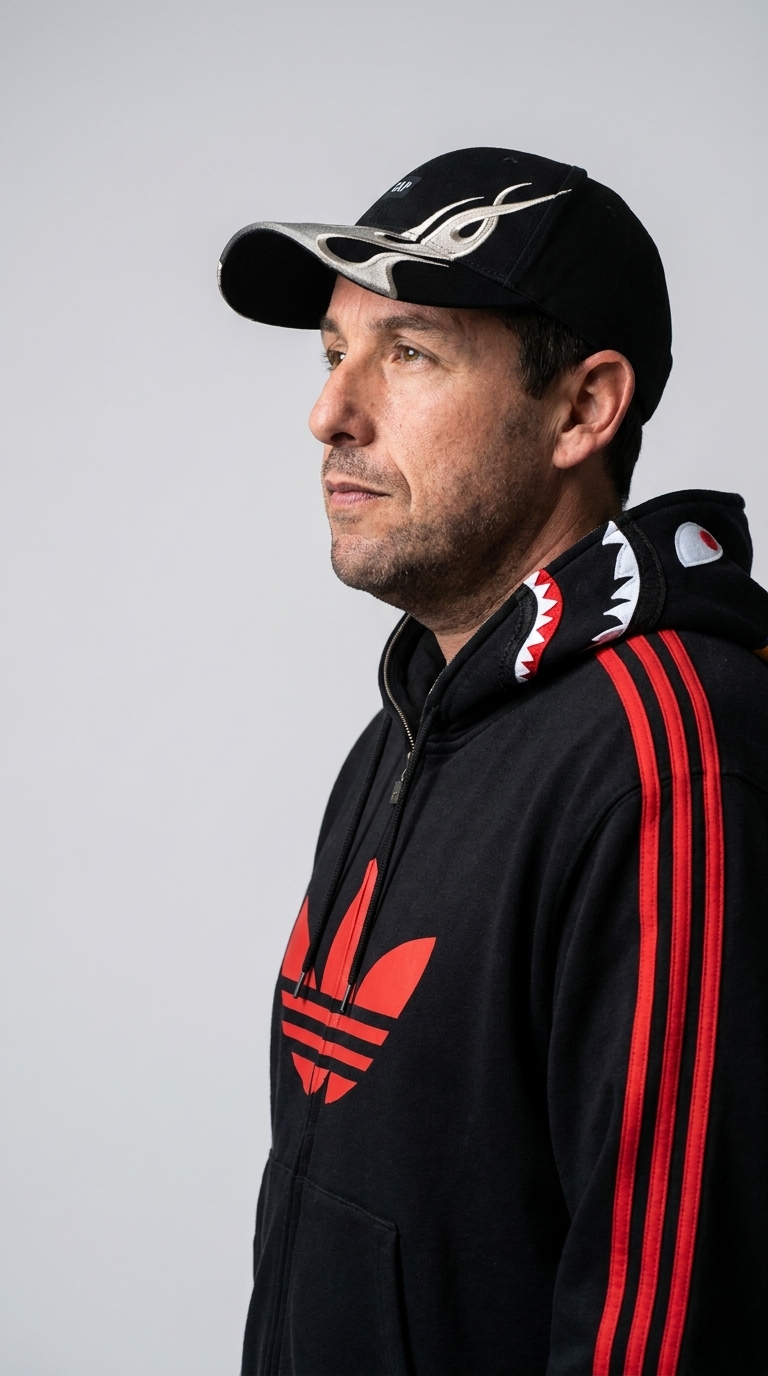

Select an image to inspect the full-size file. These are the archived files; your browser scales their display. Example from AI-Image-Detection-Bypass, with Deprint processing. Attribution and file hashes. No endorsement is implied.
The portrait is an example of a joint negative observation. It does not make the image a photograph or erase its known processing history.
What to check on your own image
- Keep the original and identify the specific signal you want to change.
- Check that the original actually triggers the relevant verifier. A detector that misses the original cannot demonstrate that treatment helped.
- Check the exact downloaded output. An app's “processing complete” message is not an independent detector result.
- Inspect faces, text and colors before accepting a lower score.
- If you edit or re-export again, treat that as another file with its own result.
If your goal is only to remove stored information, start with metadata cleanup. If you are considering a redraw, read what it can change in the picture.
A practical example: the check passed, but the upload is still flagged
Imagine a designer who processes a generated product mockup. A watermark verifier reports no SynthID, but another service labels the upload AI-generated. There is no necessary contradiction: the second service may be using a visual classifier, a provenance record or a combination of signals.
The next step is to identify the actual check. Repeatedly stripping EXIF will not address a visual model that is analyzing the picture. Repeatedly redrawing the image may damage product details without resolving a platform’s decision. If the platform does not explain its process, record that uncertainty rather than assuming its label came from SynthID.
This scenario is illustrative. The desk and bakery observations above provide a measured version of the narrower point: a negative watermark observation can coexist with a high visual classifier score.
Keep the result attached to the exact export
The selected portrait went through several stages. A negative observation on a restored PNG should not automatically be attached to a later camera-stage PNG or a resized JPEG. They are different inputs, even when they show the same person in the same pose.
A useful personal log can be simple: original, processed output, tool, date, result and visual notes. For a study, add a hash, dimensions and format. If a service transforms the file during upload, report the interface as part of the measurement and avoid claiming knowledge of its hidden processing.
| Situation | Supported statement | Statement that goes too far |
|---|---|---|
| Original positive, output negative in one verifier | Detectability changed in this comparison | Every watermark was erased |
| Output negative in a visual classifier | This classifier did not flag this file | The image is a camera photograph |
| Several completed checks are negative | These named checks were negative on this output | No current or future detector can identify it |
| A check fails to complete | No usable result was obtained | The file passed |
What would make the evidence more general?
Freeze the processing method before testing new scenes. Include images with different content, dimensions and source histories, and keep the full set of outcomes. Choose visual acceptance rules before looking at scores, so an altered face or unreadable label cannot quietly count as a useful success.
If the method was tuned against a detector, evaluate it with an untouched detector as well. Report watermark and visual outcomes in separate columns. The result readers need is not merely how often a number fell, but how often the intended checks changed while the image still met its purpose.
Our existing examples motivate that study. They do not replace it. That is why the strongest current conclusion is about the distinction between checks, with exact-file demonstrations of agreement and disagreement.
How we tested, and what remains unknown
The examples come from exploratory Deprint experiments, not a random sample of images. The watermark observations used Gemini's web verification interface; internal upload processing is unknown. The standalone SynthID portal did not supply the qualified results reported here. Errors and unavailable checks were kept separate from negative responses.
The portrait was already selected for study. Desk and bakery results used different treatment families where stated. We do not pool them into a removal rate. Read the methods and download the observations.